Hult Prize at NCKU Concludes 2025–2026 Season with Grand Final Showcasing Student-Led Social Innovation
Jan 4, 2026
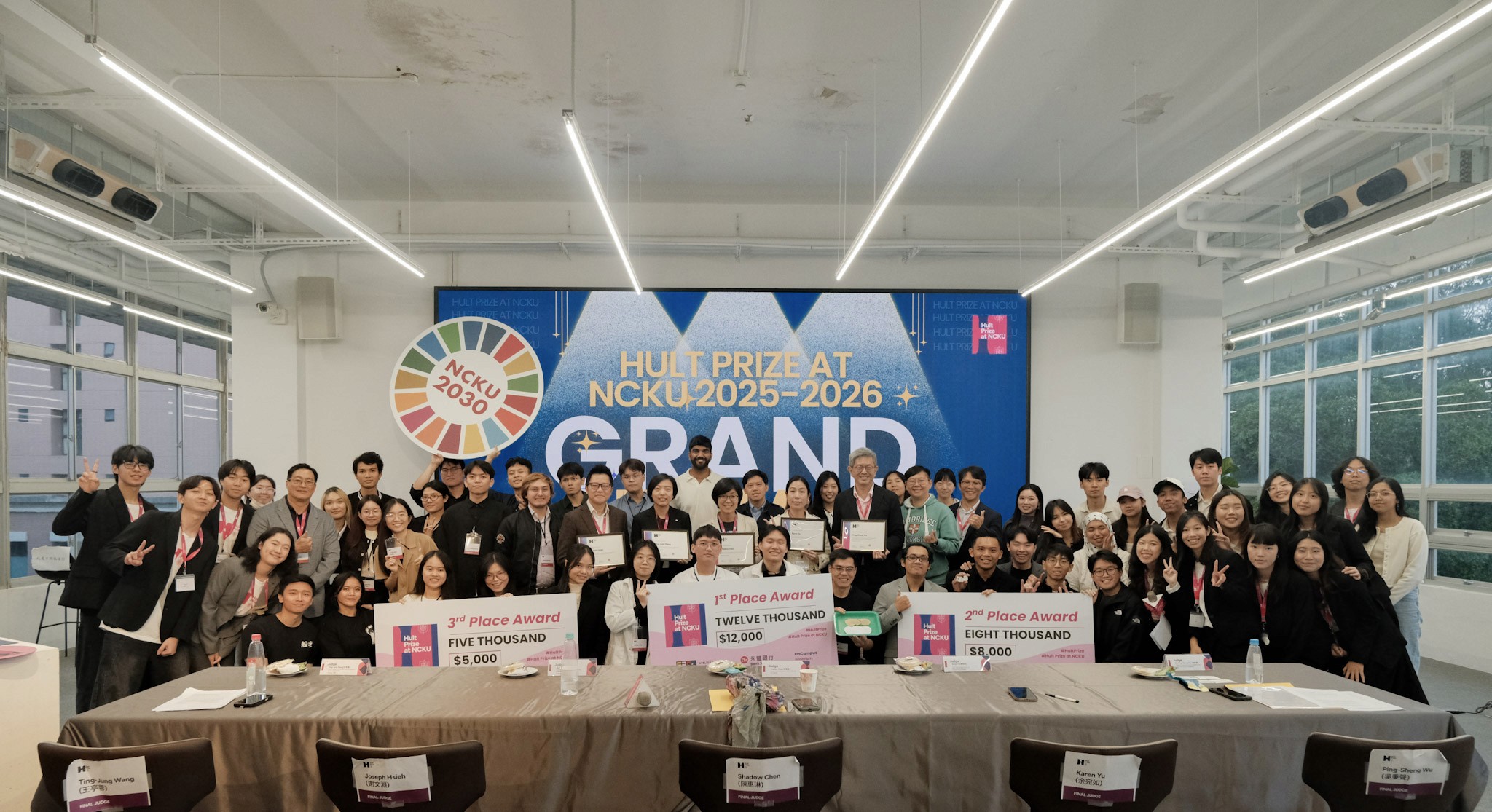
The Hult Prize at National Cheng Kung University (NCKU) successfully concluded its 2025–2026 season with the Campus Grand Final held on December 20, 2025, at Atelier Future, Sheng-Li Campus. The event brought together student founders, faculty members, industry professionals, sustainability practitioners, and ecosystem partners, marking the culmination of months of ideation, mentorship, and venture development.
Held under the theme “Energize, Engage, Empower,” the Grand Final served not only as a pitching competition but also as a learning platform where students were challenged to defend the feasibility, scalability, and real-world relevance of their ideas. Eight finalist teams advanced to the final stage, presenting solutions that addressed issues ranging from menstrual health equity and diabetes management to circular fashion, education access, and agricultural sustainability.
The program opened with welcoming remarks from hosts Kassandra and Yuki, who guided participants through the event flow and set a collaborative tone for the afternoon. Campus Director Eugene emphasized that the Grand Final represents a transition from campus experimentation to real-world accountability, encouraging teams to approach social innovation with discipline, responsibility, and sustained execution. Vice Campus Director Bryant Chou echoed this perspective, framing evaluation as a learning process and urging teams to treat feedback as a tool for growth rather than judgment.
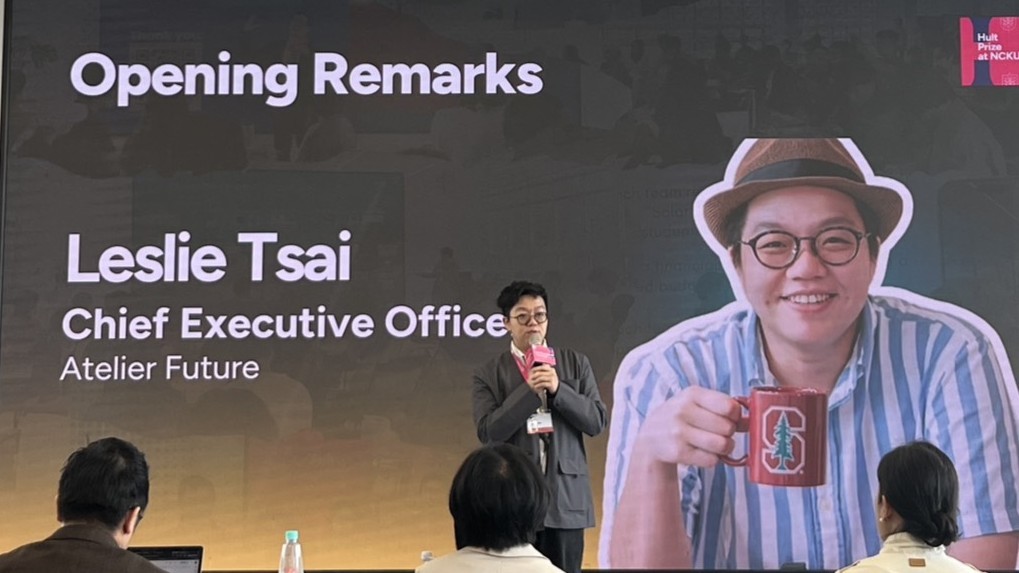
As venue host, Leslie Tsai, CEO of Atelier Future, highlighted the importance of supportive innovation ecosystems, noting that meaningful impact depends on environments that enable experimentation, collaboration, and access to real-world networks.
A key feature of the Grand Final was its multi-disciplinary judging panel, which reflected the complex standards faced by real-world impact ventures. Judges included Prof. Wu Ping-Sheng, Senior Vice President of NCKU; Karen Yu, President of the Industrial Technology Investment Corporation; Shadow Chen, CEO of Circular Taiwan Network; Joseph Hsieh, Executive Director of the Taiwan Impact Investing Association; and Jenny Wang, Manager at EY Climate Change & Sustainability Services. Together, they evaluated teams based on impact logic, operational feasibility, sustainability, and execution readiness.
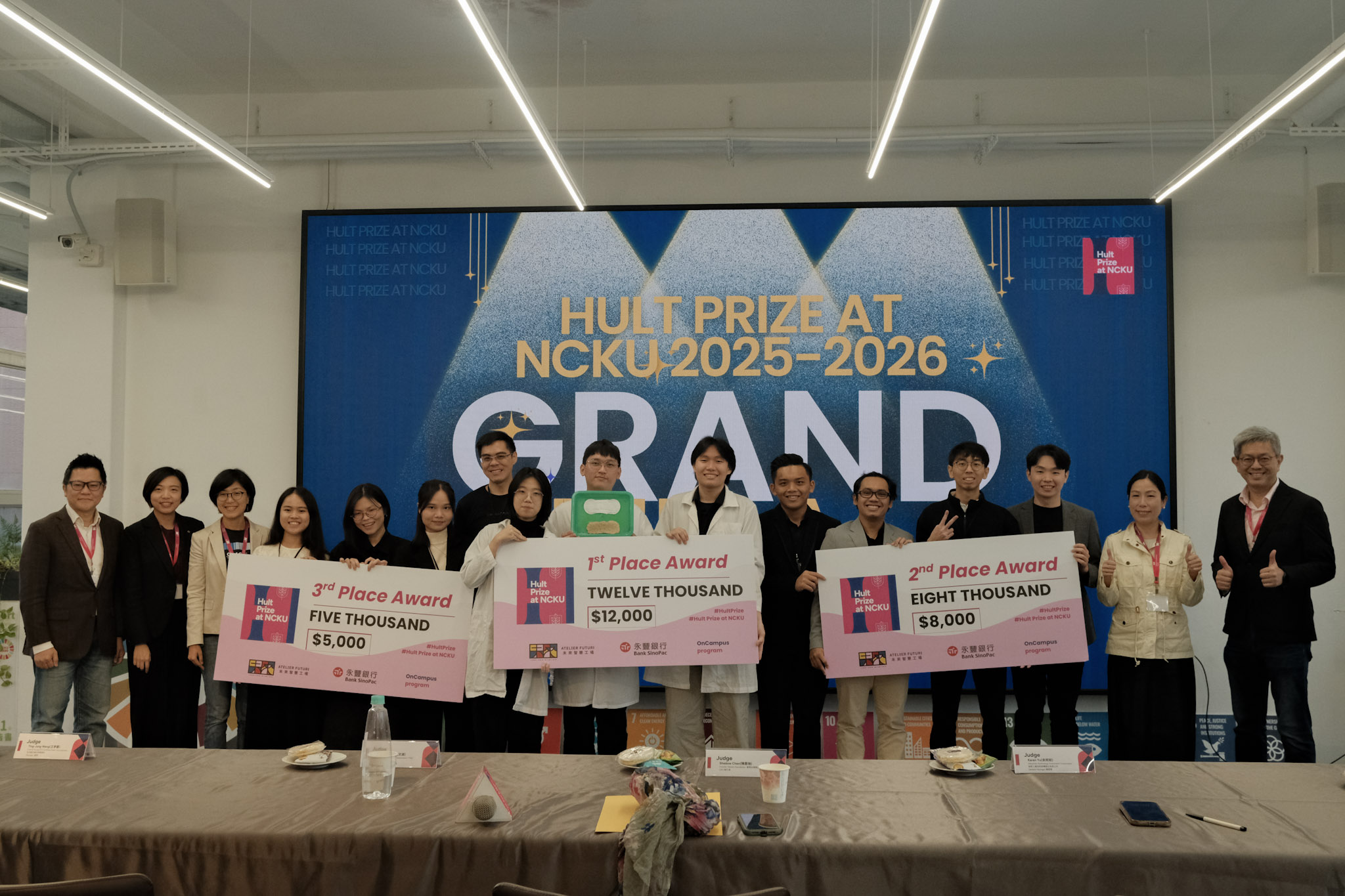
Following two pitching sessions and an intensive deliberation period, the Award Ceremony recognized teams whose proposals demonstrated strong alignment between social ambition and practical execution. FAST was awarded First Place, earning NTD 12,000 for its solution transforming agricultural waste into affordable, biodegradable menstrual products aimed at advancing menstrual health equity. Glucoluco received Second Place for its integrated diabetes management system combining medical technology with inclusive access, while WiggleWise secured Third Place for its watch-based digital platform supporting early childhood development and ADHD intervention.
Beyond the awards, judges emphasized that the most impactful ventures were those grounded in evidence, pilot validation, and clear execution pathways rather than aspirational claims alone. Across the top-ranked teams, disciplined systems thinking and real-world adaptability emerged as defining strengths.
The event concluded with a collective reflection, certificate presentations to judges, and a final group photo, symbolizing both the end of the campus competition cycle and the beginning of the teams’ next stages of development. Organizers highlighted that the Grand Final’s deeper value lies in strengthening NCKU’s campus impact pipeline — equipping students with the standards, feedback, and confidence needed to pursue social entrepreneurship beyond the classroom.
The Hult Prize at NCKU organizing team extended sincere appreciation to its cash, in-kind, knowledge, and media partners for their continued support in empowering student changemakers and advancing Taiwan’s role in the global social innovation ecosystem.